Sound familiar?Lawrence Heights
- The call
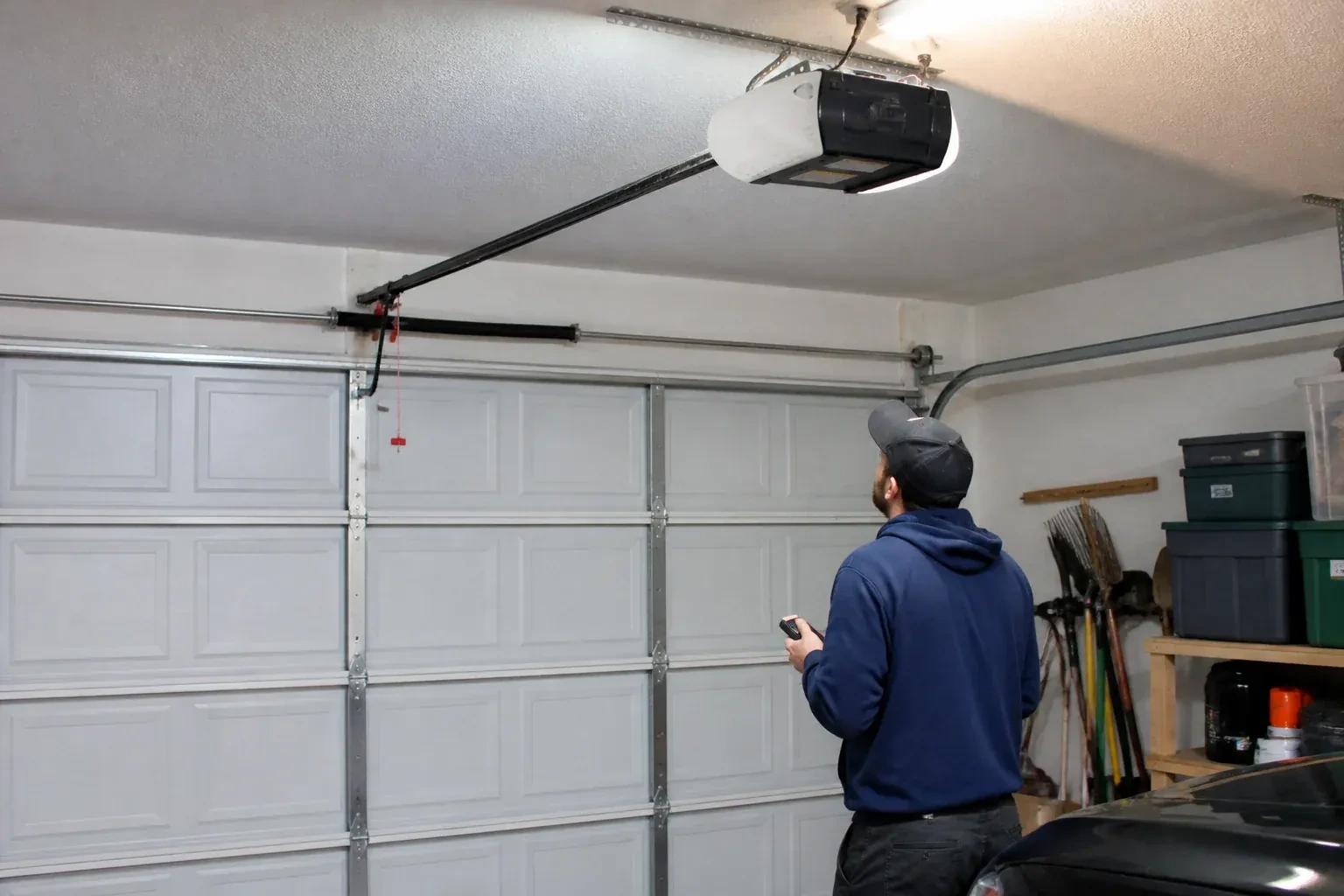
- Press the remote and the motor runs its full cycle, lights on, the usual whir, but the door does not move a centimetre. Up at the trolley, the belt is hanging loose where a small plastic clip used to hold it.
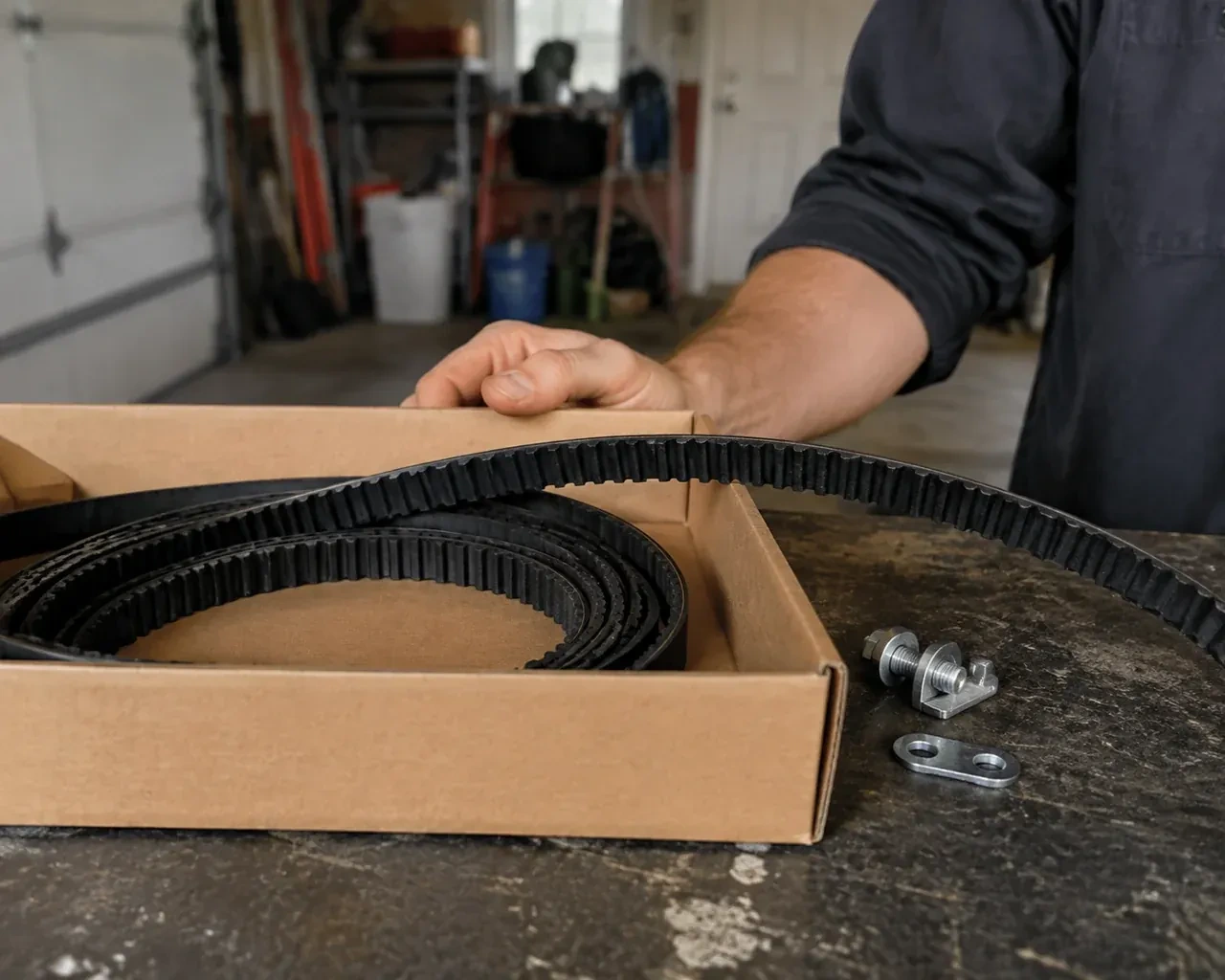
Halfway up, every single time, the door hesitates and there is a ratcheting sound from the motor head, then it carries on. A closer look shows a stretch of the belt where the teeth are worn almost flat.
A stalled belt drive is often a trolley problem, not a belt problem. The trolley rides the rail in two halves: an outer part linked to the door arm and an inner part gripped by the belt. Pulling the red cord parts them so the door can be lifted by hand; running the operator, or a second pull, locks them again. When the release lever sticks, the housing cracks or the halves refuse to re-engage, the motor moves the belt and nothing else. Repair means freeing or replacing the trolley, checking the belt for damage from the drag, and confirming the inner half is in step with the motor.
Sound familiar?Lawrence Heights
Belt-Drive Opener Repair · Lawrence Heights
Scene 1
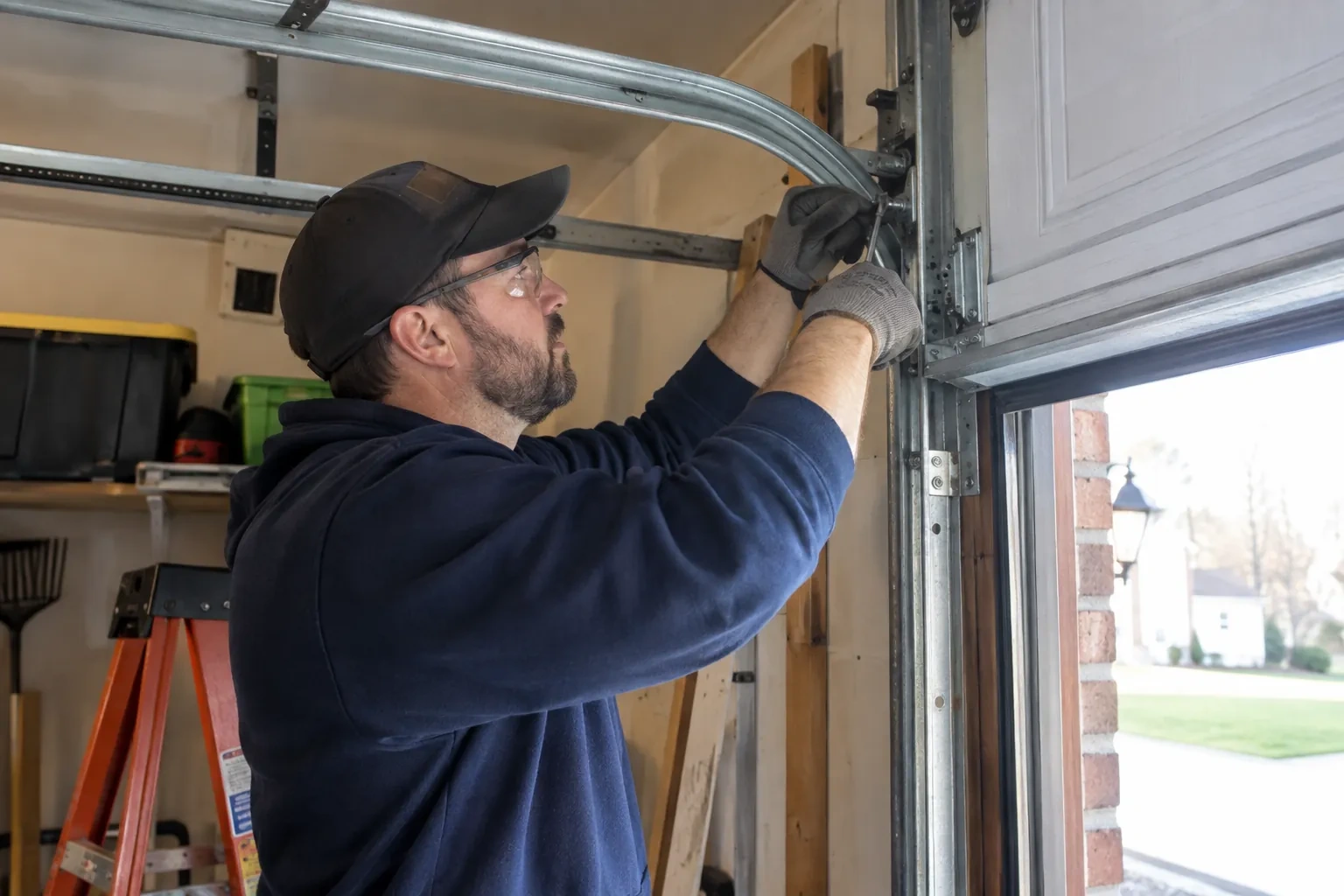
The trolley turns the belt's pull into movement of the door and takes every start and stop. The technician checks its two halves: the inner half the belt is fixed to, and the outer half the door arm hangs from. The release lever should part them cleanly when the cord is pulled and lock them together again when the operator runs or the cord is pulled a second time. Cracks in the housing, a lever gummed with old grease, play on the rail, or a trolley sitting hard against a stop bolt are all noted. Whether trolley and motor are in step is checked too, since a belt that has been off the sprocket often leaves them disagreeing.
Scene 2
With the drive rebuilt and the door reconnected, the operator is taught its door again. Newer units run a learn cycle that records the full travel and the effort the door needs; older ones have limit screws and force dials set by hand. The close limit is set so the bottom seal meets the floor without the belt straining, and the open limit so the top section stops short of the header. Then the tests: a 2x4 laid flat under the door must send it back up on contact, and an object passed through the photo-eye beam must reverse it while closing. Any hesitation is adjusted and the tests are run again.
Scene 3
You now know where the release handle hangs and what happens when you use it. A pull parts the trolley so the door can be lifted by hand through a power cut; running the motor, or a second pull, reconnects it. What matters after this repair is to pull it only with the door closed. Releasing a door that is open, or one whose springs are tired, can let it fall because the spring no longer carries its weight; the release itself disconnects the trolley from the belt, so the falling door lands on its tracks and hinges, not the belt the technician just corrected. Practise it once with the door down so the first real use is calm.
What shapes the quoteArmour Heights Door Specialists
FeesSame any hour
Rubber stiffens in cold, so a belt in a detached garage behaves differently at minus twenty than in July. Tension set on a warm day may run tight in deep cold, and a frozen bottom seal can make the operator reverse before the door has moved. The technician sets tension to the opener maker's specified measurement rather than the season, and puts a cold-rated lubricant on the door hardware.
A tension adjustment with the safety tests is a short visit. Replacing the belt, trolley or idler pulley, then phasing the motor, relearning limits and running the reversal tests, is usually an hour or two. A gear-and-sprocket kit at the motor head takes longer because the head unit is opened. If the balance test turns up spring work, that is agreed as a separate job with its own time.
Not usually. The trolley is checked while the belt is off: its halves should part with the release cord and lock again, the housing should be free of cracks and it should ride the rail without play. A trolley that passes those checks stays and simply receives the new belt and a fresh clip. One that sticks or rattles is replaced in the same visit.
TorontoOntario
Belt-Drive Opener Repair · Toronto, Armour Heights, Lawrence Manor, Wilson Heights, Winston Park
Every square is one home in a hundred.
On-site assessment
Halfway up, every single time, the door hesitates and there is a ratcheting sound from the motor head, then it carries on.
(289) 536-9773, open 24/7.
On-site assessment preferred · (289) 536-9773, open 24/7