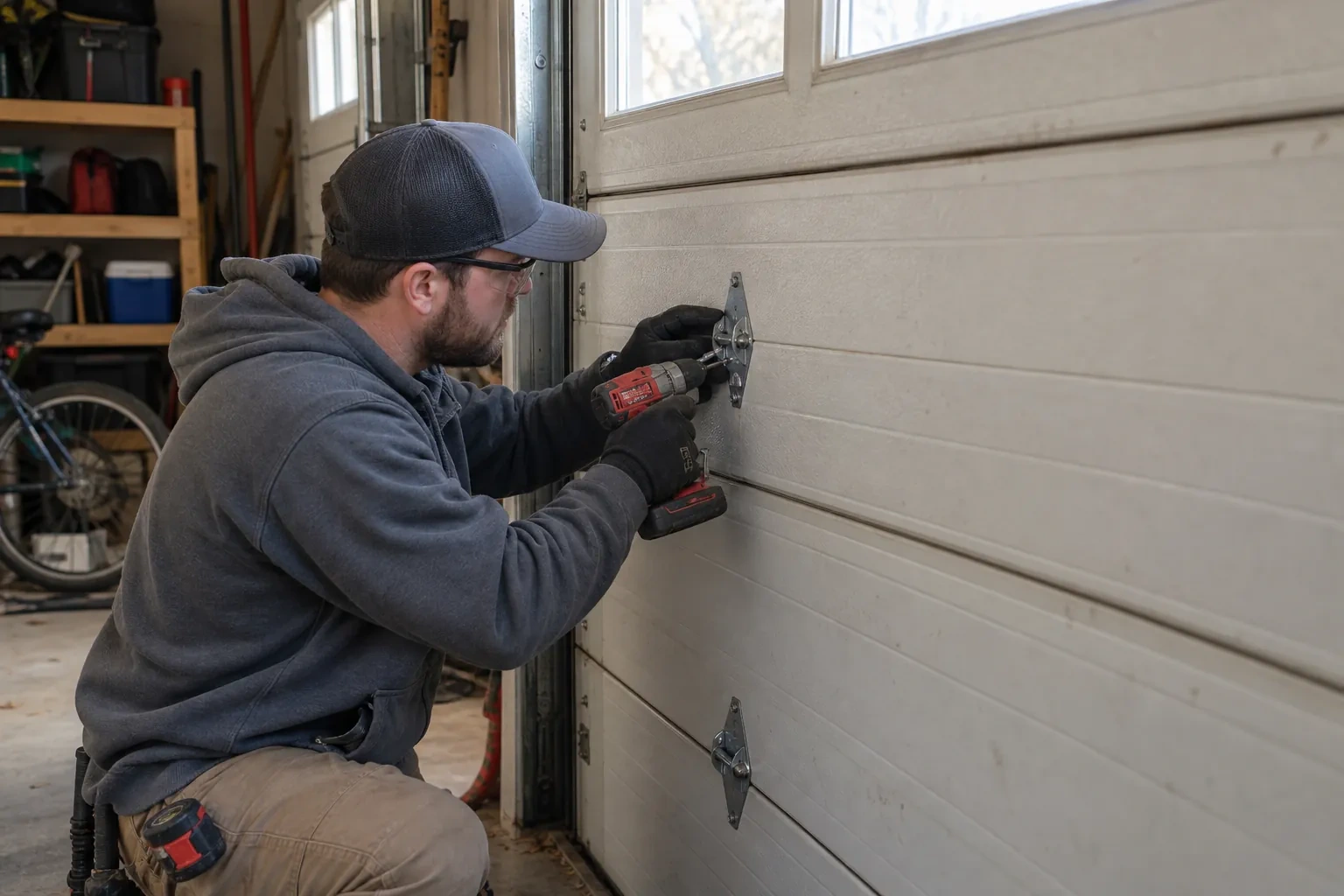
For property managers and homeowners alike, these notes cover the practical side of door ownership: inspection intervals, what to log, how to brief a technician and how to compare options.
- Bulletin 1Extension Spring Replacement: what to note firstThe door climbs with the left corner ahead of the right, then twists as it turns into the ceiling track. Looking up, the spring on the right side is stretched longer than its partner, with daylight showing between the…Read
- Bulletin 2Garage Door Track Repair or Replacement: how the work is doneTrack rarely fails on its own; something moves it. A bumper creases the vertical run, vibration works lag screws out of the jamb, slush and salt eat the bottom foot of the channel, worn rollers slowly spread the lip…Read
- Bulletin 3Garage Door Roller Replacement: reading the quoteA lubricant made for garage doors, applied lightly to hinge knuckles, roller stems and the springs, following the door maker's own recommendation, since the right product and whether bearings are included varies by…Read
Asked and answered
Repair & Maintenance
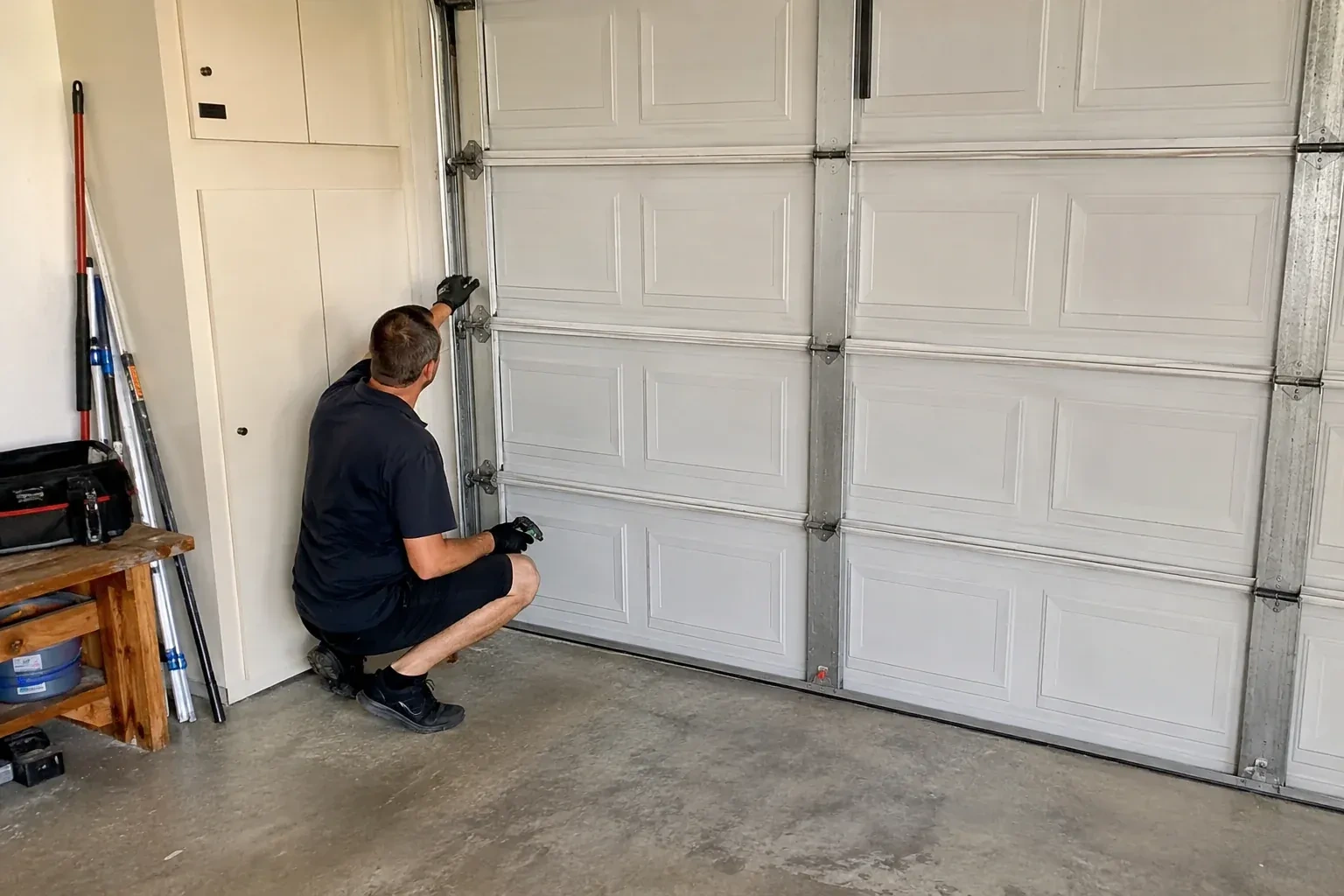
Will the springs be adjusted while you are there?
No, and that is deliberate. An inspection reads the counterbalance: the technician checks the coil, measures wire size and length, and watches how the door behaves by hand. If it is out of step with the door's weight, the report says so and by how much. Winding a spring is its own appointment, done once the door is clamped and the system is calm, which keeps the inspection record honest about the door as found. Garage Door Safety Inspection
The sensor light is blinking. What does that mean?
On most openers a steady light on each photo-eye means the pair are aligned and seeing each other, and a blinking light means the beam is interrupted or the sensors are out of line. Common causes are a bracket nudged by a bin or a tire, dust or salt film on a lens, low sun at a certain hour, or a chafed wire. During a tune-up the lenses are cleaned, the brackets straightened, the pair realigned and the wiring checked back to the opener. Garage Door Tune-Up
Our shop's overhead door was hit by a delivery vehicle. Is this the same service?
Yes, with the extra weight and size of a commercial door taken into account. The door is secured, the impact damage to sections, track and brackets is assessed, and the reset is paired with whatever track or hardware replacement the strike requires. Because the opening usually needs to be secured before the premises can close for the night, tell the technician when you call so the right track profile and rollers arrive with them. Off-Track Garage Door Reset
What happens to the opener during the work?
It is disconnected at the release cord and unplugged before any hardware comes off, so the motor cannot pull on a door that is missing a section. After the new section is in and the door has been balanced by hand, the opener is reconnected and tested: its reversal against a board on the floor and its photo-eyes are checked every time, and the open and close limits or the force setting are reset only if that check shows they need it. Garage Door Panel Replacement
Springs & Hardware
I lubricated everything and the grinding came back. Why?
Lubricant restores bearings and hinges that are still sound; it has nothing to offer a wheel worn oval, a nylon tire that has cracked, or bearings whose balls have pitted their race. When a spray settles the noise for a day or two and it returns, the wear is in the roller itself and replacement is the answer. Spray on the track or a plastic wheel can make matters worse by collecting grit, so the technician cleans that off as part of the job. Garage Door Roller Replacement
What do the numbers stamped on garage door hinges mean?
They mark the joint the hinge belongs to, counted from the bottom. A 1 goes at the joint above the bottom panel, a 2 at the next one up, then 3, with 4 and 5 on taller doors. Each higher number stands the roller a little further off the door face, so the door leans into the jambs when closed and follows the track as it climbs. Centre hinges use the geometry of a 1. Garage Door Hinge Replacement
Why is the horizontal track sagging?
The horizontal run hangs from the ceiling on back hangs of perforated angle, and it sags when a hanger bends, its screws pull out of a joist, or it was only ever fixed into drywall. A sagging hanger droops that run out of level or its intended pitch. The fix is a straight or new hanger screwed into solid framing, with the run set to the manufacturer's specified pitch and matched to its partner; a door that drifts back toward the opening once raised is a separate, balance-related symptom. Garage Door Track Repair or Replacement
Should I lubricate the cables?
A light film, yes. A mist of silicone or a lubricant made for garage doors on the cables, especially the lowest stretch near the brackets, sheds moisture and slows rust. Avoid heavy grease or oil, which holds grit and salt against the strands. The springs, hinges, roller bearings and bracket pins take the same product a couple of times a year, and the tracks are simply wiped clean. Garage Door Cable Replacement
Openers & Access
Can the force just be turned up so the door closes in winter?
Raising force is not the fix; it only hides one. The force setting is the opener's sense of touch, and turning it up so a door pushes through a frozen seal or stiff rollers also means it pushes harder against anything else in its path. The right approach is to free the seal, lubricate the moving parts for cold weather, confirm the balance, and then set force as low as reliably works, proving it with the 2x4 test. Garage Door Opener Diagnosis and Repair
How much slack should the chain have?
It is a measurement, taken with the door closed and disconnected from the trolley. At the middle of the rail the chain should sit at the height the opener's own manual specifies for its rail shape, since the figure is not the same across makes. The two nuts on the trolley set and lock it. With the door reconnected and closed, some droop appears; that is expected as long as the measurement returns when the door is open. Chain-Drive Opener Repair
The belt is fine in summer but stiff and noisy in winter. Why?
Rubber stiffens in cold, so a belt in a detached garage behaves differently at minus twenty than in July. Tension set on a warm day may run tight in deep cold, and a frozen bottom seal can make the operator reverse before the door has moved. The technician sets tension to the opener maker's specified measurement rather than the season, and puts a cold-rated lubricant on the door hardware. Belt-Drive Opener Repair
How many remotes and keypads can be added?
Capacity depends on the model: current operators hold anywhere from about eight to forty remote codes, so most households can pair every driver, a keypad, in-car buttons and a phone with room to spare. Remotes are added by holding the learn button on the head unit and pressing the remote; the console guide shows the steps and the technician leaves them written down. If a remote is lost later, clearing the memory and re-teaching the others takes only a few minutes. Garage Door Opener Replacement
Installation & Upgrades
How can I tell if the balance has changed later?
During a planned manual check, a meaningful change may appear as a door that feels much heavier, will not remain controlled at an intermediate position or begins moving unevenly. New cable slack, rubbing or abrupt travel also deserves attention. Note the position and behaviour, then keep the door still for a technician's assessment. Sectional Garage Door Replacement
How do I operate the door during a power outage?
At handover, the installer demonstrates the operator's emergency release and the safe handle or gripping point for manual movement. The exact sequence follows the operator instructions. Once released, a balanced door can be raised and lowered by hand with controlled effort. Reconnection is also shown, and remotes are kept aside until the mechanism is properly engaged again. Insulated Steel Garage Door Installation
What does wind-rated mean for a garage door?
It means a documented door configuration is designed and evaluated to resist stated inward and outward wind pressures at a particular size. The description covers the assembled system: sections, reinforcement, tracks, rollers, hinges, brackets, fasteners, and attachment details. Suitability still depends on matching that configuration to the opening and project criteria. Wind-Rated Garage Door Replacement
Will my current garage door opener stay in place?
That depends on its supported door size and weight, rail arrangement, condition, controls and safety features. The assessment compares its product information with the selected door and checks whether the attachment can be reinforced correctly. When it remains, travel and force are reset for the new balanced assembly. Any opener change is identified separately in the planned scope. Carriage-House Garage Door Installation