Sound familiar?Wilson Heights
- The call
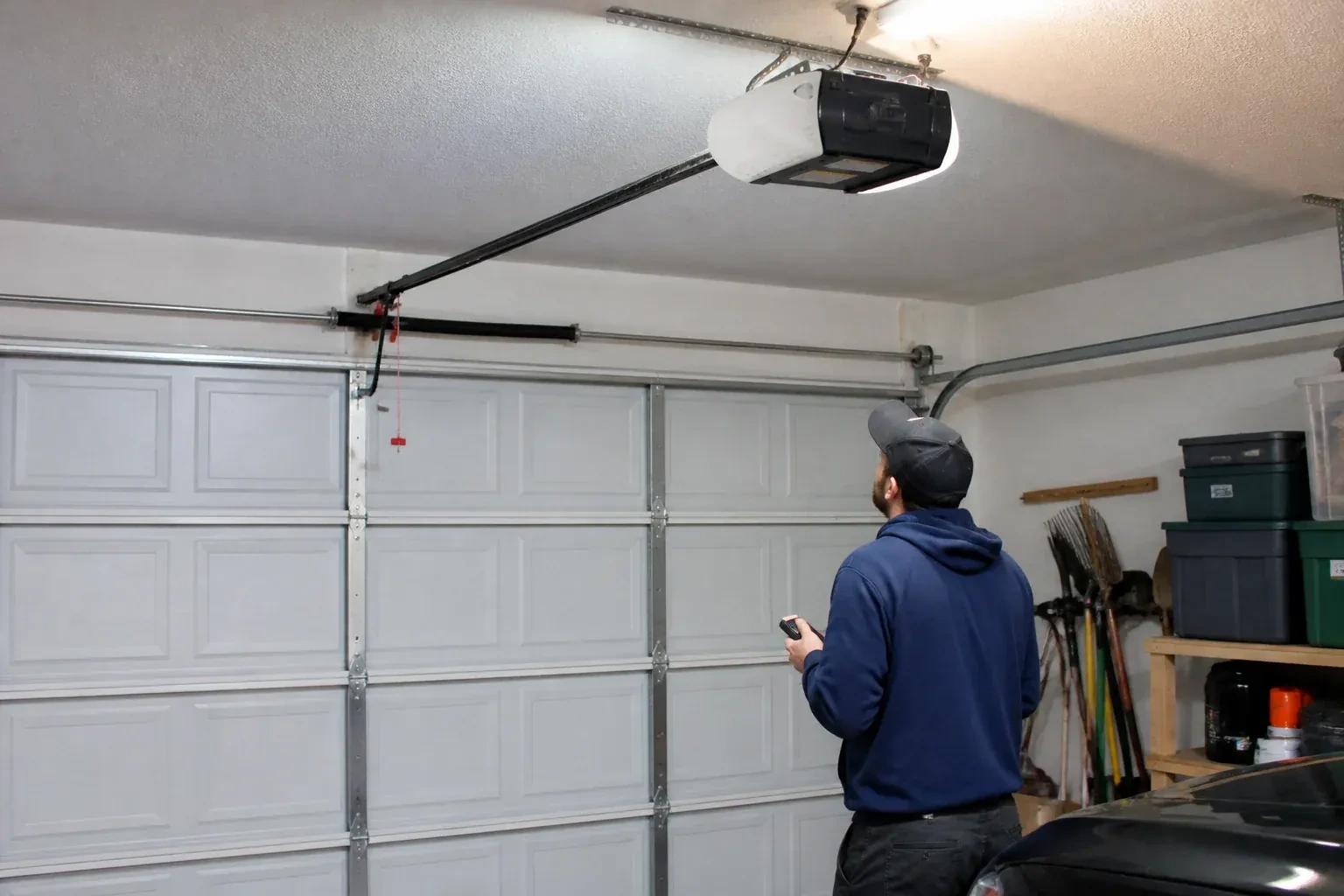
- Someone backed the car in a little too far, a bin or a bicycle brushed the track, and since then the door starts to close and comes back up. One sensor now sits at a slightly different angle from the other.
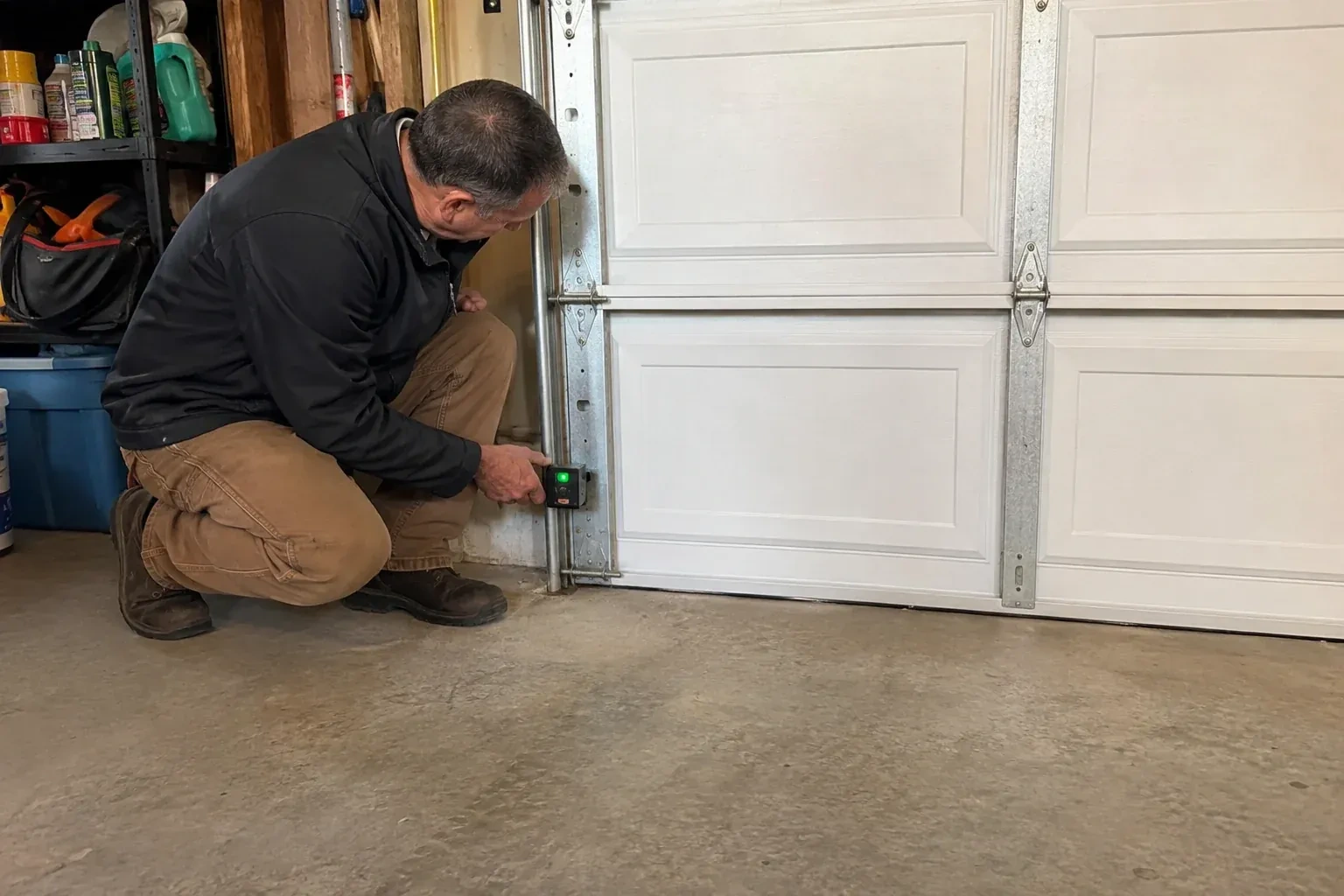
After a cold night the door stays open until the garage warms up. There is frost on the sensor lenses and a ridge of salty slush piled against the brackets where the snow blower was parked.
Two small sensors face each other across the doorway: one sends an infrared beam, the other receives it. While the beam lands on the receiver, the opener will close the door; the moment anything interrupts it, the door stops and returns to open. Every sensor call comes down to why the receiver has lost the beam: an object, a bent bracket, a dirty or frosted lens, sun in the receiving eye, a broken wire or a tired sensor. The technician works through those in order, fixes the one that applies, and shows you the steady indicator lights that mean the pair is talking again.
Sound familiar?Wilson Heights
Photo-Eye Sensor Alignment or Replacement · Wilson Heights
Scene 1
Before anything is adjusted, the technician clears the strip of floor between the two sensors and looks along the beam line at sensor height. Things that break a beam are rarely dramatic: the corner of a recycling bin, a hose left coiled by the wall, a bag of salt, leaves blown in under the door, a cobweb bridging a lens, a new weatherstrip or track shoe that sits a little proud. Snow and ice piled inside the door in winter count too. With the path clean, the door is tried again, because a fair share of sensor calls end right here, with a lesson about where things can and cannot sit.
Scene 2
No sensor job is finished on a steady light alone. The door is closed from the wall control and from a remote, and while it is on its way down an object is passed through the beam; the door must stop and return to fully open. Then a 2x4 is laid flat on the floor under the centre of the door and the door is closed onto it; it must reverse on contact. Both are repeated, the opener's diagnostic light is confirmed clear, and any app or hub reporting a sensor code is refreshed. The customer watches the tests so the normal behaviour is seen, not described.
Scene 3
Should the door start bouncing back up in the future, you know the order to check. Look along the floor for anything in the beam. Look at the two sensor lights for a dark or flickering one. Look at whether the door backs up as soon as it starts or only after touching something, since the second points to the door's settings rather than the beam. Note whether the opener light is flashing and how many times. With those four facts the cause is usually obvious, and if a visit is needed, the technician arrives already knowing where to begin.
What shapes the quoteArmour Heights Door Specialists
FeesSame any hour
Start the door closing and, while it is moving, swing a broom handle through the beam low across the opening; the door should halt and travel back up. Next, put a 2x4 flat beneath the door's centre and run the door onto it; it should back off as soon as it touches. If either test fails, close the door first if you can, use it by hand with the manual release, and book a visit; do not release it if it feels heavy.
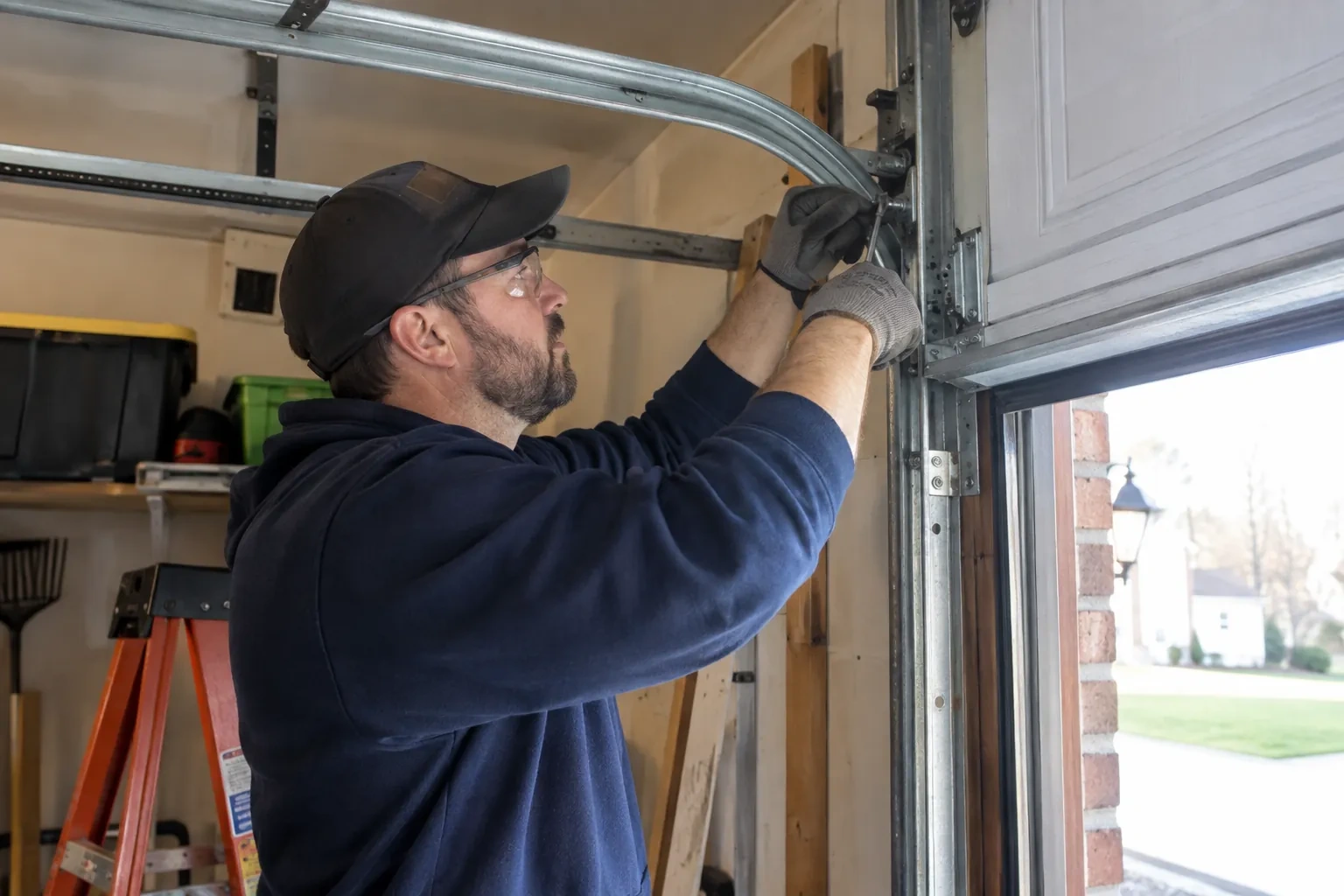
Frequently. The sensors are fed by a thin two-conductor wire from the head unit that crosses the ceiling and drops down both sides of the door, and it is pierced by staples, cut by shelving screws, chewed by mice or pulled from its terminals more often than a sensor fails. Both sensor lights dark, or an opener code for an open or reversed circuit, points to the wire. The technician tests the run with a meter and repairs or replaces the damaged section.
Alignment, cleaning and a bracket adjustment are done inside an hour on most doors, including the two tests at the end. Replacing the pair adds a little for wiring and setup. Re-running the wire all the way from the motor to both sensors is the part that stretches a visit, especially where the wire is behind a finished ceiling or the garage is full. Having the floor by the door clear before arrival helps.
TorontoOntario
Photo-Eye Sensor Alignment or Replacement · Toronto, Armour Heights, Lawrence Heights, Lawrence Manor, Winston Park
Every square is one home in a hundred.
On-site assessment
After a cold night the door stays open until the garage warms up.
(289) 536-9773, open 24/7.
On-site assessment preferred · (289) 536-9773, open 24/7