Sound familiar?Wilson Heights
- The call
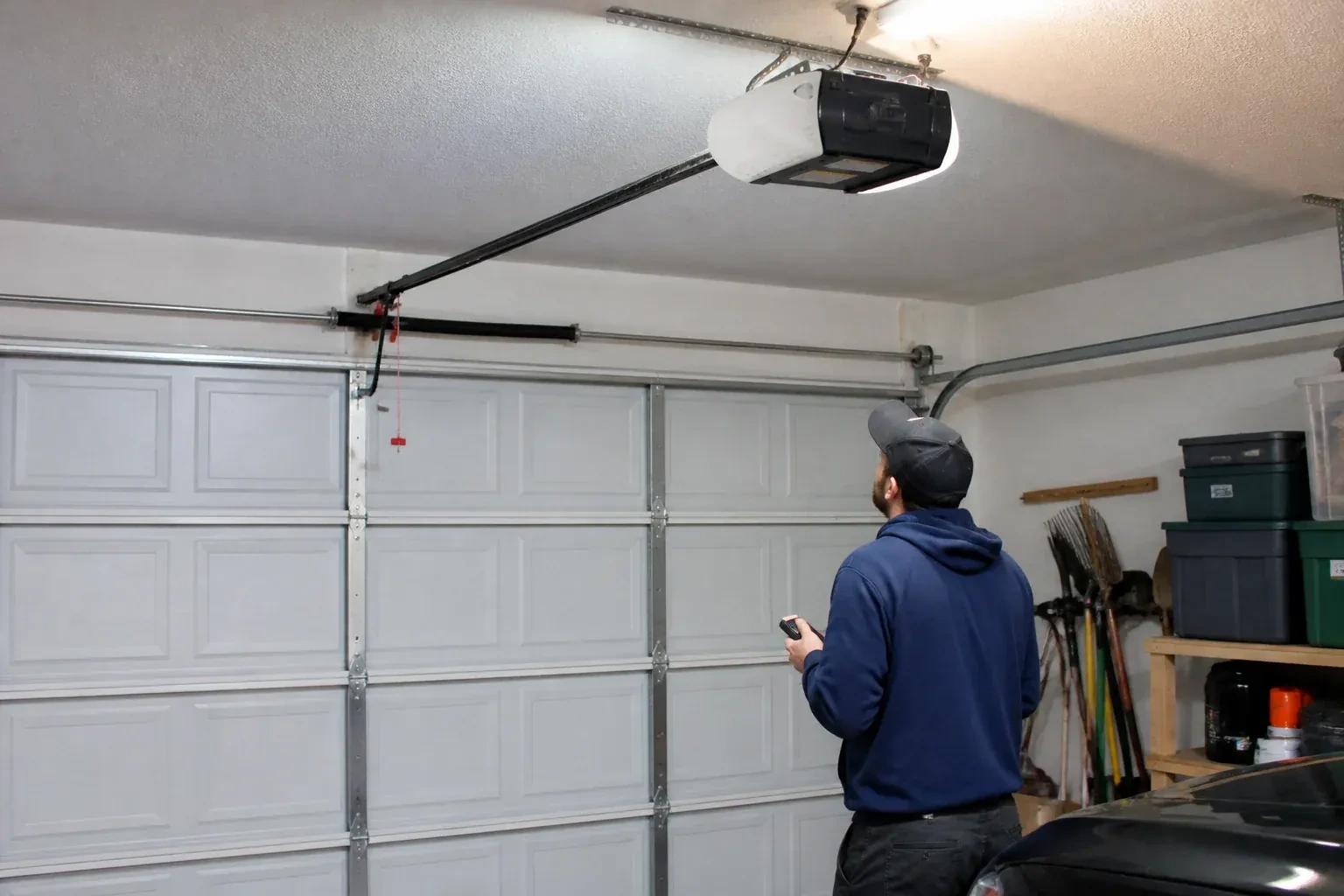
- The chain hangs in a loop under the rail and slaps against it on every cycle. It used to sit snug. Now the whole house hears the door leave, and the sound has a metallic clatter it never had before.
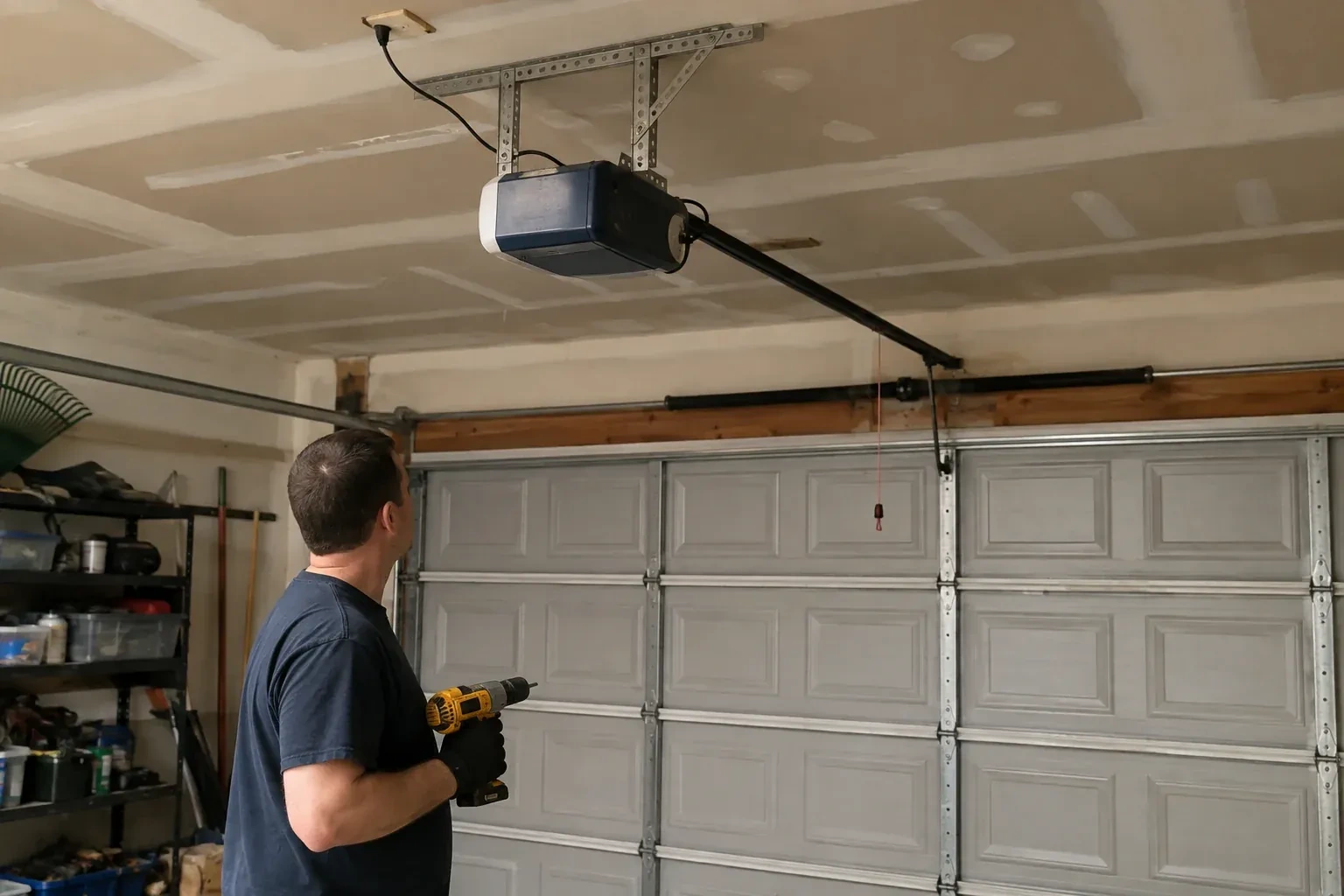
The motor runs, you can hear it working, but the door never moves. When you look up, the sprocket on top of the head is barely turning, and there is a little drift of pale plastic dust on the cover.
Sometimes nothing is broken and the operator has simply forgotten where the door should stop. Travel limits tell it how far to run in each direction; force settings tell it how much effort is normal, so it can notice an obstruction. When limits drift, a door stops short of the floor, reverses at the bottom or opens partway. When force is set low, the door reverses for no reason; set high, it stops protecting anyone beneath it. A chain-drive repair resets both, by screw on older heads or learn buttons on newer ones, then proves the reversal with a block on the floor.
Sound familiar?Wilson Heights
Chain-Drive Opener Repair · Wilson Heights
Scene 1
With the power off, the cover comes off the motor head so the drive can be seen. The technician looks for pale shavings around the drive gear, which mean the teeth are wearing away, and for a sprocket shaft that rocks when pushed, which points to worn bushings. The worm gear on the motor shaft is checked for scoring, the grease is judged for age and cold-thickening, and the capacitor is inspected for swelling. On newer heads the RPM sensor and its magnet are checked, since a faulty one makes the operator lose track of how far the door has moved. This look decides whether the job is a gear kit, a chain or an adjustment.
Scene 2
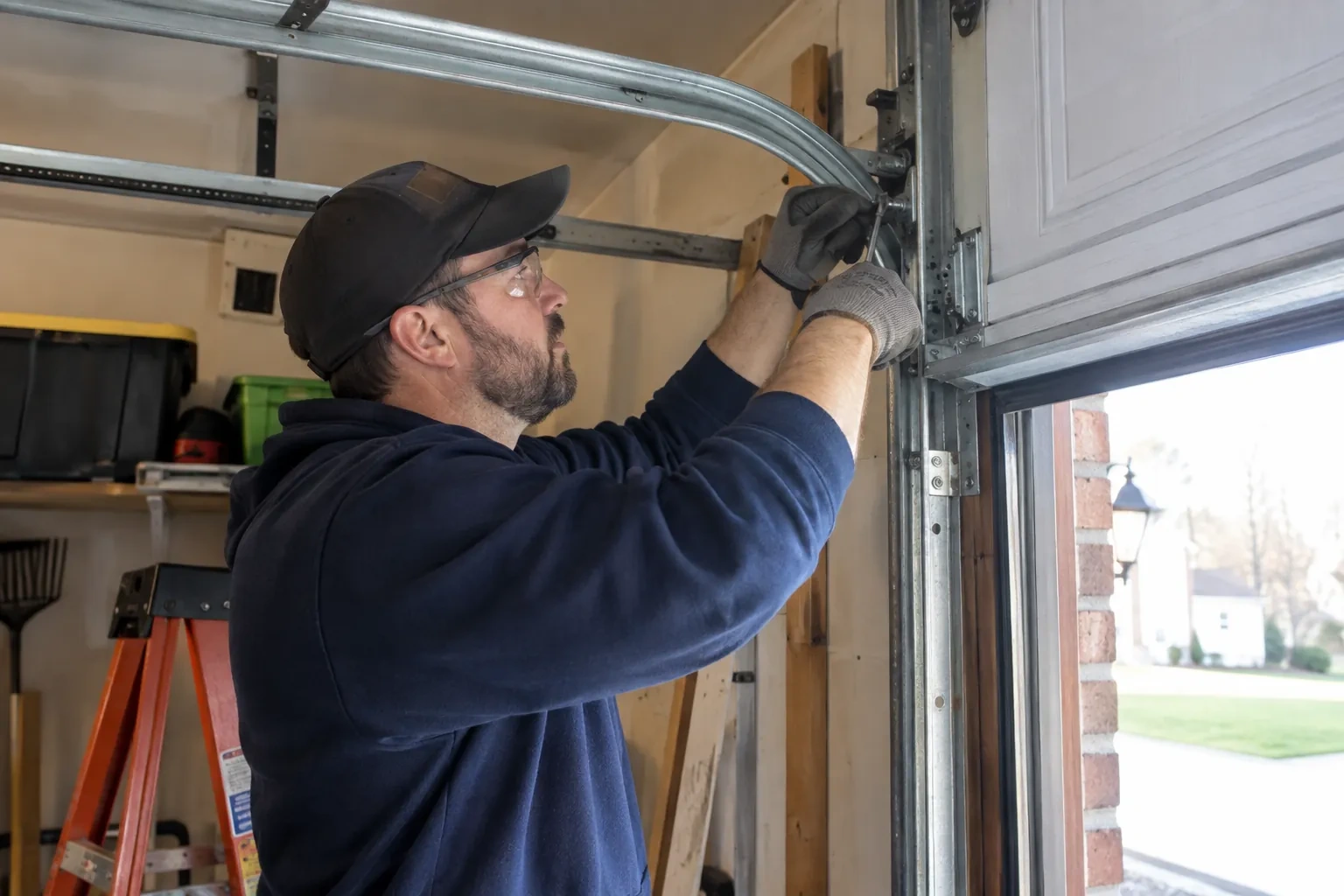
A rattling or flexing rail is corrected before any adjustment is trusted. Loose lag screws in the header bracket are tightened or moved to fresh solid wood, and a bracket that has split the framing is re-mounted. The angle-iron hangers at the head are tightened and braced diagonally so the head cannot swing, and the rail is checked with a level along its length and set with a slight fall away from the header so the trolley runs freely. Splice plates at rail joints are snugged and any burr where the trolley has caught is dressed smooth. The rail is then wiped of old grease and given a thin coat of white lithium grease where the trolley runs.
Scene 3
Before leaving, the technician writes down what was found and what was fitted: the operator's model and age, whether the gear kit, sprocket, chain, trolley or rail hardware was replaced, the tension figure set, the limit and force positions, and the results of the reversal tests. The manual is hung near the wall control so the model's own instructions are at hand for the monthly tests. This note makes any future call a short conversation, tells a home inspector what has been done, and gives whoever owns the house next a clear picture of what is hanging over the car.
What shapes the quoteArmour Heights Door Specialists
FeesSame any hour
It is a measurement, taken with the door closed and disconnected from the trolley. At the middle of the rail the chain should sit at the height the opener's own manual specifies for its rail shape, since the figure is not the same across makes. The two nuts on the trolley set and lock it. With the door reconnected and closed, some droop appears; that is expected as long as the measurement returns when the door is open.
No. The manual slide lock on the door is disabled or removed once an operator is connected, and the technician checks that during the repair. A motor pulling against a locked door strains the chain, strips the drive gear and can bend the top section of the door. If you want the door secured against remotes, the lock button on the wall control switches them off, and a track lock designed to work with an operator does the rest.
The trolley is the carriage that rides along the rail, pulled by the chain, with the door arm hooked to it. It gets stuck when the travel limits creep and it is driven onto the stop bolt at the head end or the stop tab at the door end, where the motor hums but nothing moves. The technician slackens the chain, runs the trolley off the stop under power, and pulls the limit back so it stops short in future.
TorontoOntario
Chain-Drive Opener Repair · Toronto, Armour Heights, Lawrence Heights, Lawrence Manor, Winston Park
Every square is one home in a hundred.
On-site assessment
The motor runs, you can hear it working, but the door never moves.
(289) 536-9773, open 24/7.
On-site assessment preferred · (289) 536-9773, open 24/7