Skip to content
ArmourHeights Door SpecialistsOpen 24/7 (289) 536-9773
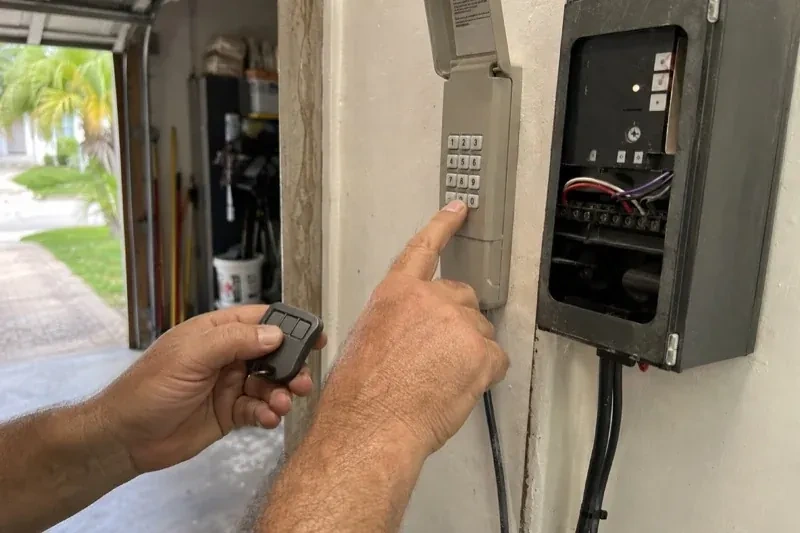
Hands holding a small remote and pressing a wall-mounted keypad beside an open control box with visible wiring. — Garage Door Remote and Keypad Programming, Lawrence Manor

Openers · Lawrence Manor

Garage Door Remote and Keypad Programming

You bought a new remote at the hardware store, followed the little leaflet twice, and the opener light never blinked. The old remote still works.

In plain words

Not every dead remote needs programming, so the visit starts by ruling out the simple things. The wall control may be in lock mode, which tells the opener to ignore all remotes and shows as a blinking indicator. The coin cell may be flat, or its contacts corroded. LED bulbs in the opener's own sockets can drown the radio signal so the remote works only at arm's length. The antenna wire may be tucked away. A known-good remote is tested against the receiver, and only when the receiver answers it does programming of your controls begin.

Sound familiar?Lawrence Manor

The call
Your remote was in the visor when the car was broken into last night. So was the insurance slip with your address on it. The door still answers that remote, wherever it is now, and you would very much like it not to.
NextHow the visit goes

Garage Door Remote and Keypad Programming · Lawrence Manor

How the visit goes

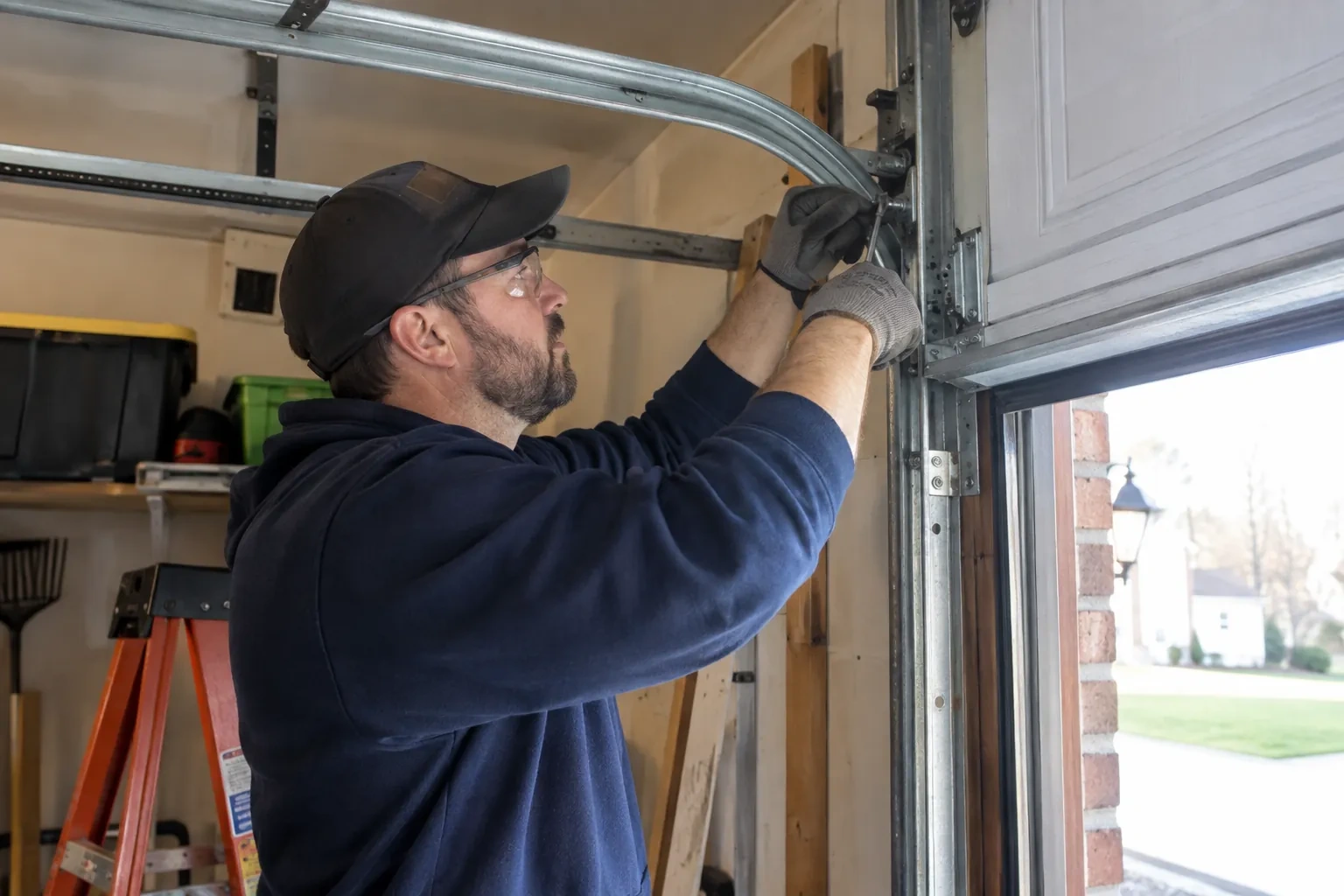
Technician in safety glasses turning a small tool at a bracket where the curved metal track meets a door panel. — Lawrence Manor
  1. Scene 1

    One control or all of them?

    The pattern of failure points to the cause. When a single remote has gone quiet and the rest work, the trouble is inside that remote: a flat cell, corroded contacts, a worn button or a lost pairing. When every wireless control fails together while the wall button works, the technician looks at the opener's side: lock mode, a cleared memory, an antenna pushed into the housing, interference from bulbs, or a receiver that has stopped listening. A known-good remote from the truck is tried against the unit to settle the question. Sorting this early keeps the fix aimed at the right end of the radio link.

  2. Scene 2

    Training the buttons in the car

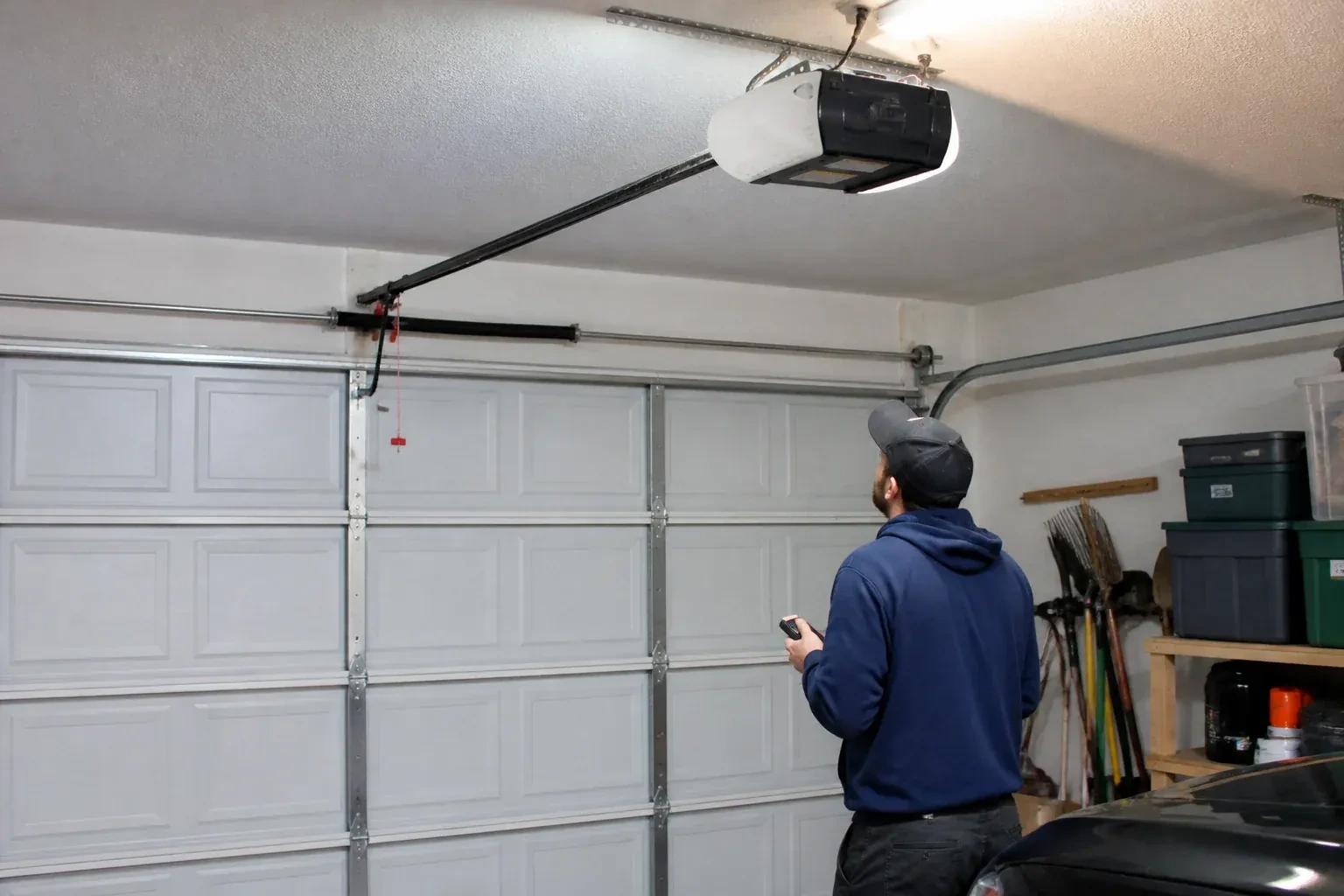
    A vehicle's built-in garage button often learns in two stages on rolling-code openers. First the car learns the remote: with the handheld remote carrying a fresh cell held close to the mirror or console, the vehicle button and the remote button are pressed together until the indicator changes. Second, the opener learns the car: the technician presses the head unit's learn button and returns to the vehicle inside the window that follows to press the trained button until the door moves. Some vehicle systems follow a different sequence with no handheld remote, so the vehicle and opener instructions are checked first. Where an older in-car system cannot hear a newer opener, a small bridge module is added.

  3. Scene 3

    Adding a control yourself next time

    Because you watched the pairing, you know where the learn button lives under the light cover, what a short press does and, just as importantly, your opener's own erase sequence. Confusing the two is the cause of many surprise lockouts. You have the compatibility details for your opener written down, so the next remote you buy is the right generation, and you know that unplugging the opener during a long absence does not erase anything. Most households can add a remote themselves after seeing it once.

In the van

  • Receiver transformer and two-conductor wire
  • Replacement remote (one, two or three buttons)
  • Add-on rolling-code receiver kit
  • Multi-door keypad
  • Contact cleaner and fibreglass brush

What shapes the quoteArmour Heights Door Specialists

Time of the call
A weekday daytime appointment and an evening, weekend or holiday visit cost the same amount for programming remotes and keypads. The technician confirms the exact figure once the number of controls and the opener model have been checked in person.
Add-on receiver for an older opener
Converting a fixed-code opener means a receiver kit, wiring to the wall-button terminals and new remotes, quoted as an upgrade rather than a programming call.
Clearing and rebuilding the memory
Erasing all stored controls after a move or a loss, then reprogramming every remaining device and vehicle, takes longer than adding one remote, and the quote says so.

FeesSame any hour

Have it ready

Before you call · 0 / 3

(289) 536-9773

Asked and answered

How many remotes can one opener store?

It depends on the unit. Older head units and add-on receivers hold a handful of devices, often fewer than ten, while newer openers store dozens of remotes, keypad codes and vehicle buttons. When a memory is full, the oldest entry may be overwritten or the new device refused. Taking stock of which controls are still in use, and clearing the ones that are not, keeps space for the devices that matter.

The wall button works but none of the remotes do. Is that a programming job?

Sometimes, but the technician rules out two things first. Lock mode on the wall control tells the opener to ignore every remote, and gives itself away by a steadily blinking wall indicator and two flashes of the opener light whenever a remote is pressed; holding the lock button releases it. A memory cleared by a long press on the learn button is the other cause, and that one is a programming job.

My opener has tiny switches inside the remote. Can I still get remotes for it?

Those are fixed-code openers from before rolling code, and their original remotes are often discontinued. Rather than hunt for old stock, an add-on rolling-code receiver is fitted: it wires to the wall-button terminals, plugs into the ceiling outlet and brings new remotes and a keypad with it. The opener must already have photo eyes at the floor; if it has none, a new opener is the sound recommendation.

Lawrence Manorinformation

TorontoOntario

Garage Door Remote and Keypad Programming · Toronto, Armour Heights, Lawrence Heights, Wilson Heights, Winston Park

Town
Lawrence Manor, Toronto
In business
14 years
Hours
Open 24/7
Nights, weekends and holidays, same fees
Visits
On-site assessment preferred. Request a visit or call.

2021 census: what it means at the door

Every square is one home in a hundred.

  • 58 in 100 homes · older homes
  • About 58% of homes in Toronto were built in 1980 or earlier, according to the 2021 Census.Original openers in older neighbourhoods often predate photo-eye sensors and rolling-code remotes. Bringing one up to date means a quieter motor, sensors that stop the door for a child or pet, and remotes that cannot be copied from the driveway, all installed in a single visit.
  • Single-detached houses make up about 23% of homes in Toronto (2021 Census).Condo and townhouse garages are frequently used for storage as much as parking, with the door opened many times a day, and the shared walls mean vibration travels. A well-balanced door, tight hardware and a quiet opener are the upgrades residents notice most.

Source: Statistics Canada, Census Profile

Open Lawrence Manor in Google Maps

On-site assessment

Request a visit.

You bought a new remote at the hardware store, followed the little leaflet twice, and the opener light never blinked.

(289) 536-9773, open 24/7.