Sound familiar?Lawrence Manor
- The call
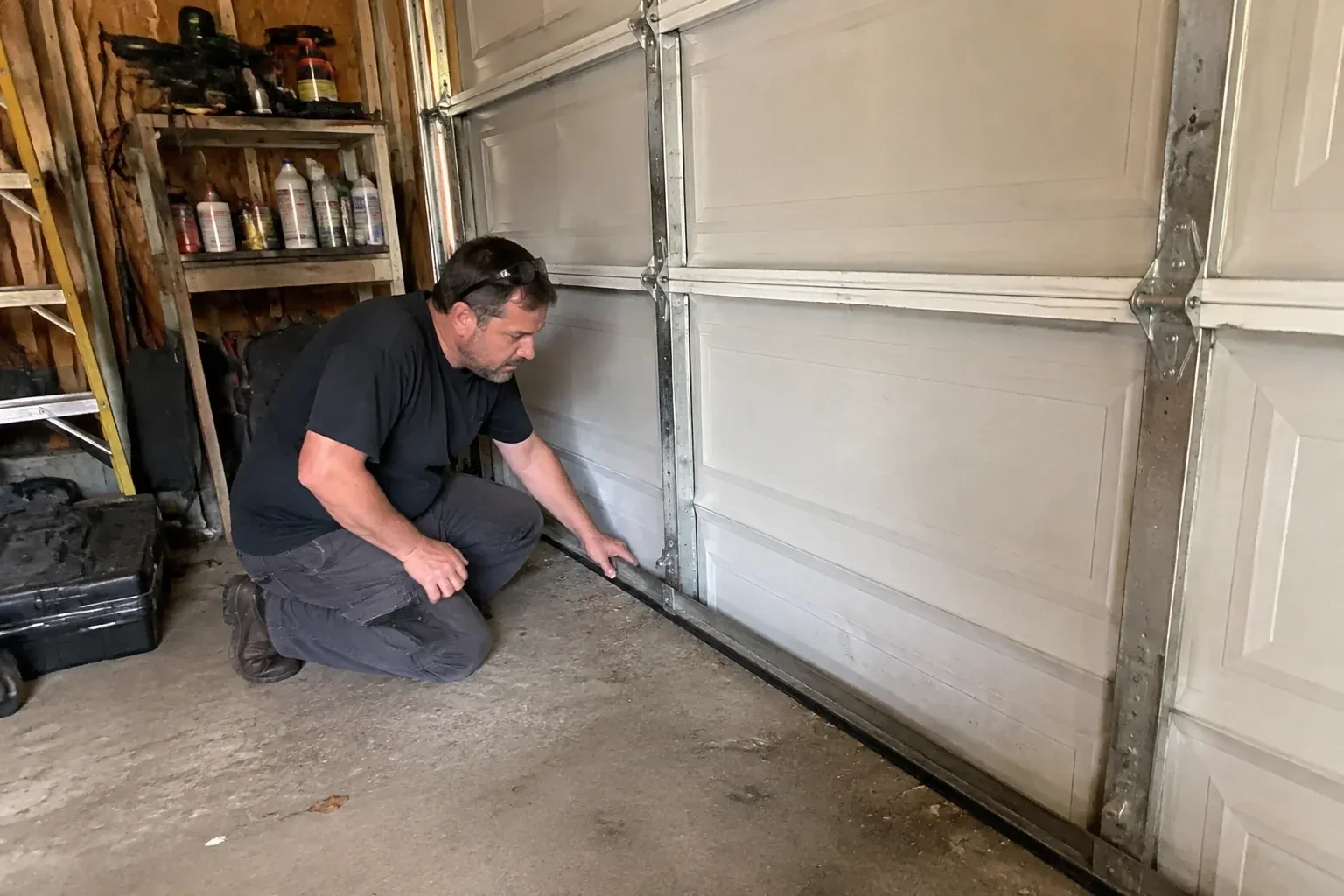
- You pulled the red cord to open the door during a power cut and it barely moved. Lifting it took your whole weight, and when you let go it came down hard. It used to float up with one hand.
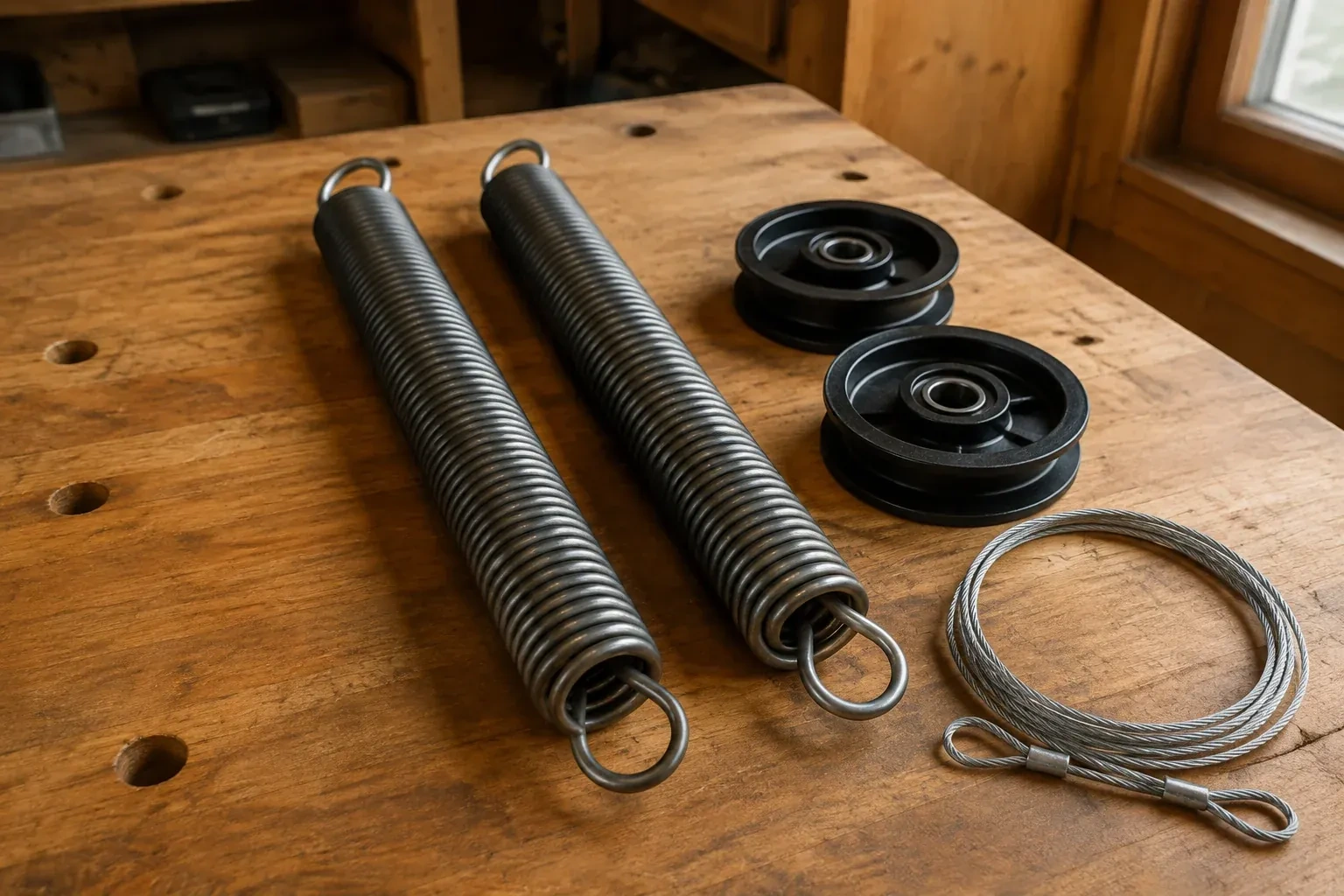
Open the door by hand and it drifts back down on its own, a little at first and then all at once. Nothing is broken that you can see, but the springs along the tracks look tired, rusty and slightly sagging.
Garage doors are balanced by one of two spring systems, and the extension kind is the one you find on many single-car doors and older detached garages. Instead of a spring wound on a shaft above the opening, an extension system uses two springs stretched along the horizontal tracks, working through pulleys and cables. It needs less headroom, which is why it suits garages with a low ceiling. Replacing these springs is its own service with its own parts: springs chosen by door weight, pulleys, S-hooks and containment cables. A technician confirms which system is on your door before any part is chosen.
Sound familiar?Lawrence Manor
Extension Spring Replacement · Lawrence Manor
Scene 1
Extension springs are chosen by the weight they are built to lift, so the door is weighed rather than guessed at. With the opener released and the springs disconnected or slack, the technician lowers the door onto a scale set on the floor under the bottom section and reads the figure. That number, together with the door's height, sets the spring rating and stretch length. The old springs are measured as a cross-check, but the scale wins if the two disagree, because a door can gain weight from new panels, insulation or a cladding added since the springs went on.
Scene 2
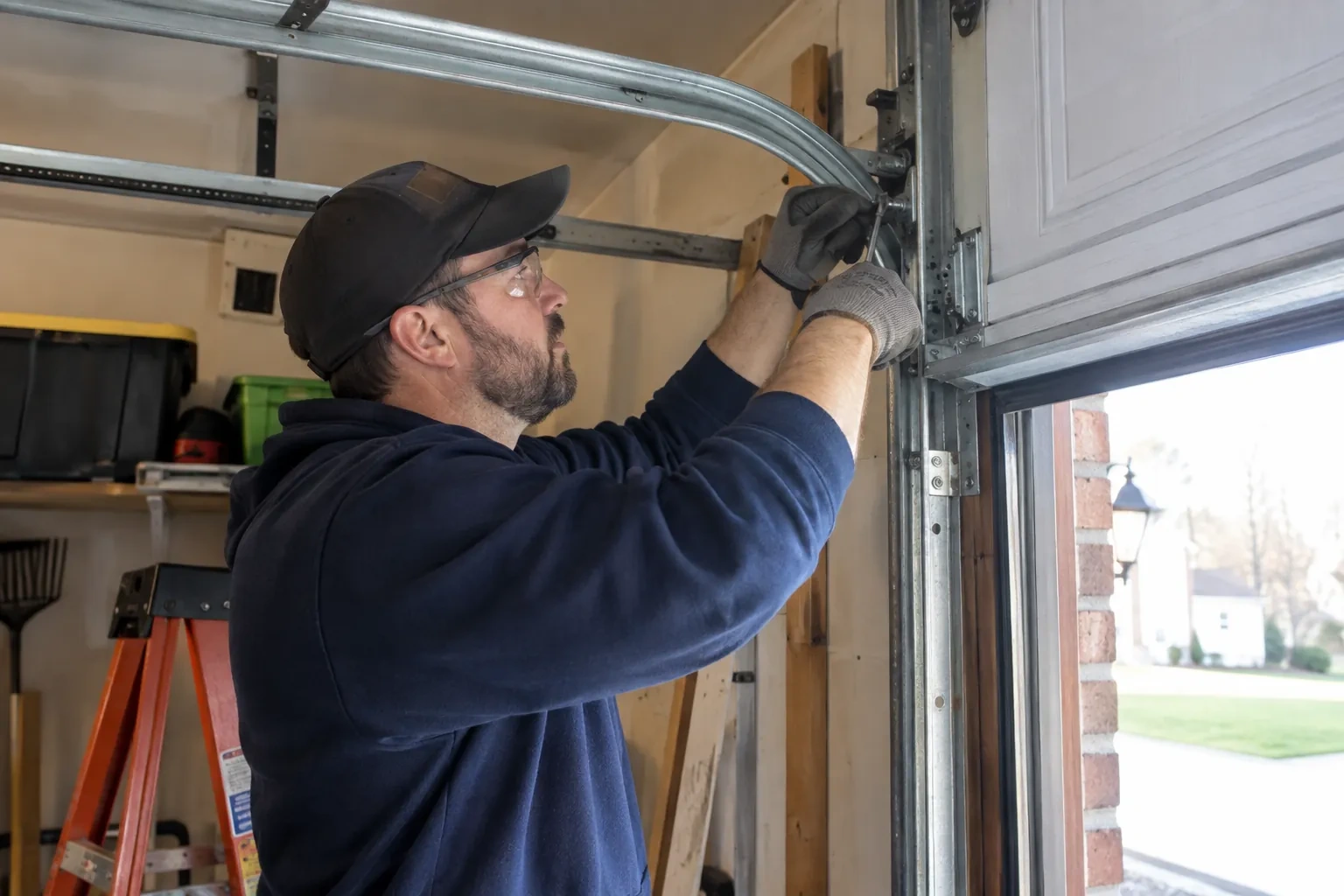
The initial tension is set with the door open and clamped, so the technician is adjusting slack springs rather than loaded ones. Each cable's S-hook is placed in a hole on the hanger, or its clip set to a mark, and the two sides are put at the same position. The cables are drawn to the same snugness so that neither corner of the door is being pulled ahead of the other. A level across the top section confirms the door is square in its tracks. Only when both sides read the same do the clamps come off and the door come down for its first balance check.
Scene 3
Your door now has a cable running through the middle of each spring, anchored at the back hanger and at the front of the track. It carries no meaningful load while the springs work, though a trace of slack as the door cycles is normal. Its job begins only if a spring ever breaks, when it holds the pieces on the cable instead of letting them fly. It should not be removed, used to hang anything, or tied back to the wall. If it ever looks badly slack, frayed or pulled from its anchor, call to have it corrected promptly rather than waiting for a routine visit. A home inspector looks for this cable when a house is sold.
What shapes the quoteArmour Heights Door Specialists
FeesSame any hour
Often, yes. Each side has two pulleys, one on the spring and one fixed at the front of the track, and the cable rides over both on every trip. A pulley whose wheel has worn a sharp groove, or whose bearing has stiffened, drags on the cable and adds load the spring has to overcome, which is a common reason the old spring wore early. Pulleys that spin freely and run true can stay.
Because the door is now much lighter for the opener to move. Over the years, as the old springs weakened, the opener's force setting may have been turned up to keep the door going, and its travel limits were set against a door that sat differently on the floor. Left alone, that extra force would push the newly balanced door too hard. Resetting force and travel, then repeating the reversal tests, matches the opener to the door it now has.
It is better to leave the door where it is. With one spring gone, the opener is lifting most of the door's weight on its own, which strains the motor, can bend the top section and often throws a cable off its pulley, adding to the work. Use another door in and out, keep the bay clear, and let the technician move the door once it is secured.
TorontoOntario
Extension Spring Replacement · Toronto, Armour Heights, Lawrence Heights, Wilson Heights, Winston Park
Every square is one home in a hundred.
On-site assessment
Open the door by hand and it drifts back down on its own, a little at first and then all at once.
(289) 536-9773, open 24/7.
On-site assessment preferred · (289) 536-9773, open 24/7