Armour Heights Door SpecialistsBulletin 2 of 3Toronto, Ontario
Garage Door Track Repair or Replacement: how the work is done
Track rarely fails on its own; something moves it.
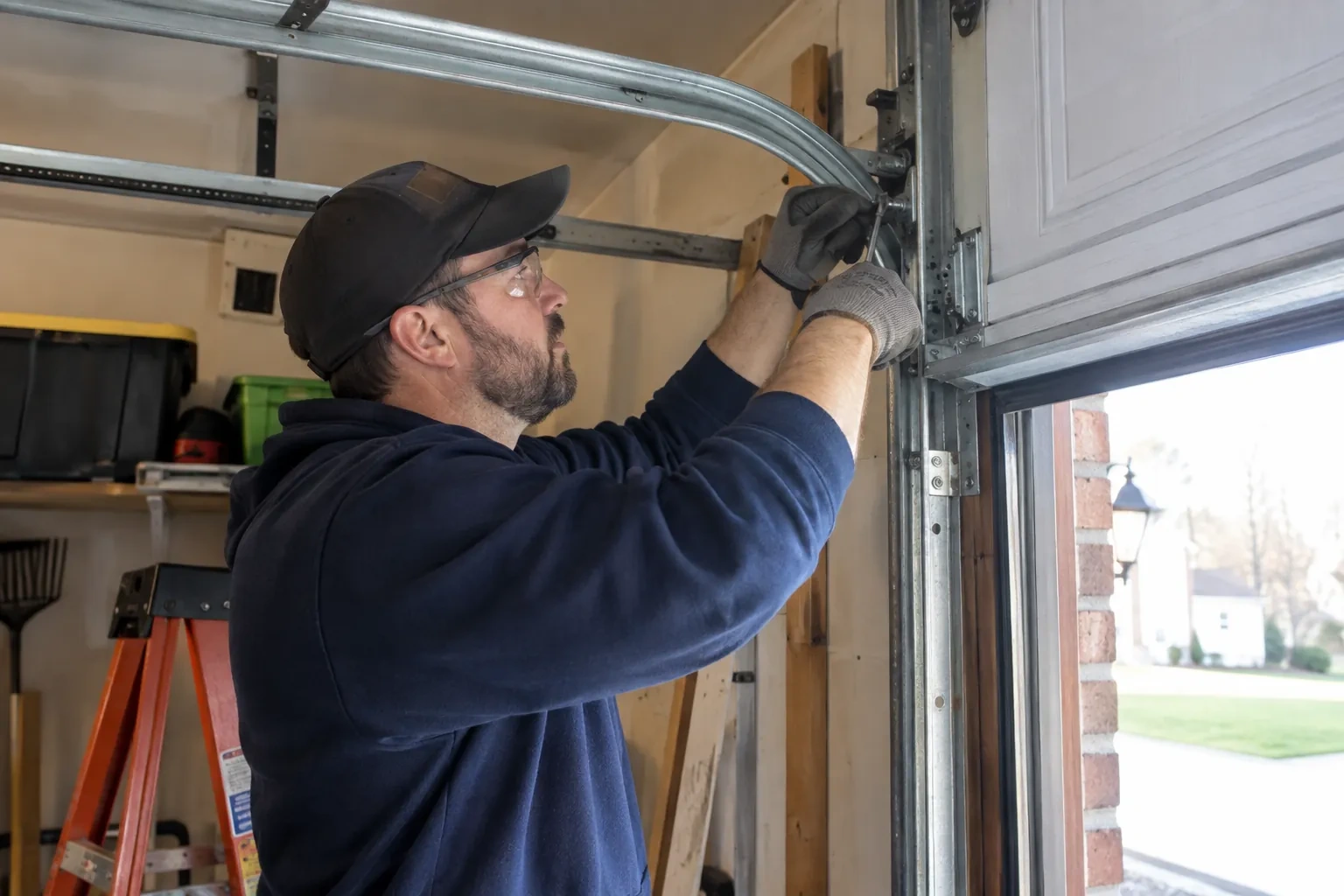
Track rarely fails on its own; something moves it. A bumper creases the vertical run, vibration works lag screws out of the jamb, slush and salt eat the bottom foot of the channel, worn rollers slowly spread the lip, and a hanger pulling from the ceiling lets the horizontal run sag. Track repair treats the cause with the symptom: the jamb is repaired if it has gone soft, rollers are renewed if they did the spreading, hangers are refixed into joists, and the threshold is checked for ice ridges. Correcting the reason is what keeps the straightened track straight for years.
What bent it
The last question is why the track moved, because the answer shapes the repair. A crease at bumper height with paint transfer is impact. A track that has crept off the jamb with screws backed out is vibration and time. Rust at the floor is winter. A twisted section on one side with a slack cable beside it usually follows a cable or spring failure that tipped the door. Overhead damage tends to trace back to storage, a ladder or a hanger that gave way. You will be asked what happened before the symptom, since a shovel in the opening or a nudge from the car is a fact only you can supply.
Setting the geometry
With the pieces in place, the technician sets the track to the door rather than to the wall. Each vertical run is plumbed, the gap to the door edge is matched side to side, and the top of each run is eased away from the jamb by the small amount that lets the door seal at the stop when closed and release on opening. The horizontal runs are levelled to each other and squared to the verticals, and the distance between the two tracks is checked at the floor, at the curve and at the rear so the door is neither pinched nor loose anywhere in its travel. Every bracket is then tightened in that position.
The record of the track profile and layout
Before leaving, the technician tells you what the door runs on: two-inch or three-inch track, the radius of the curve, whether the layout is standard, low-headroom or high lift, and which pieces were straightened or replaced. Write it inside the cover of the door manual or on a card by the opener. Any future part, a roller, a hinge, a section of track, is then ordered to match rather than measured from scratch, and a technician years from now can read at a glance how the door was set up. If the jamb was repaired or a hanger moved to a joist, that goes on the same note.