Sound familiar?Winston Park
- The call
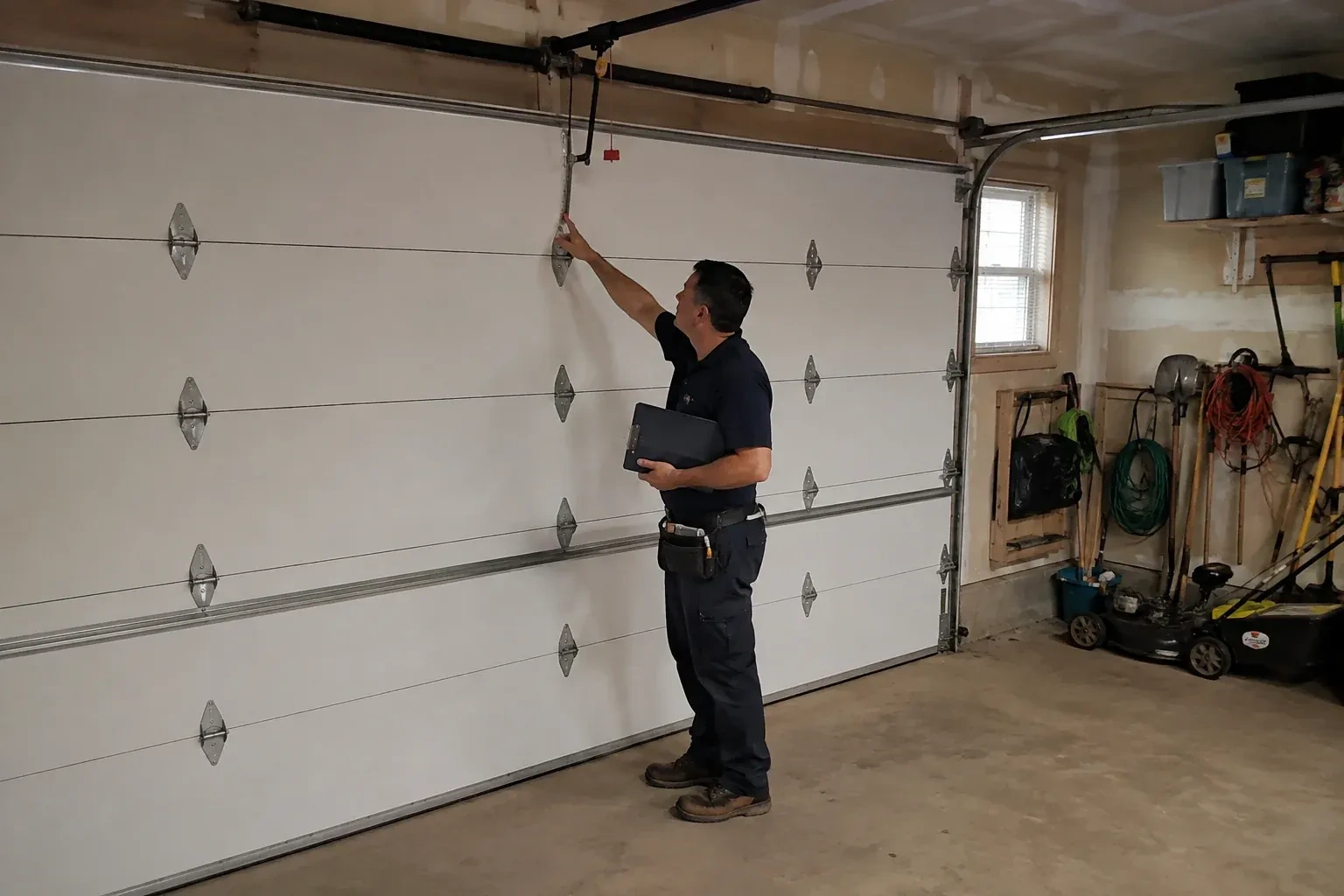
- A tenant mentioned the door is louder than it used to be. From the driveway it looks fine, but on closer inspection the hinges near the floor are streaked orange and one roller wobbles as it turns.
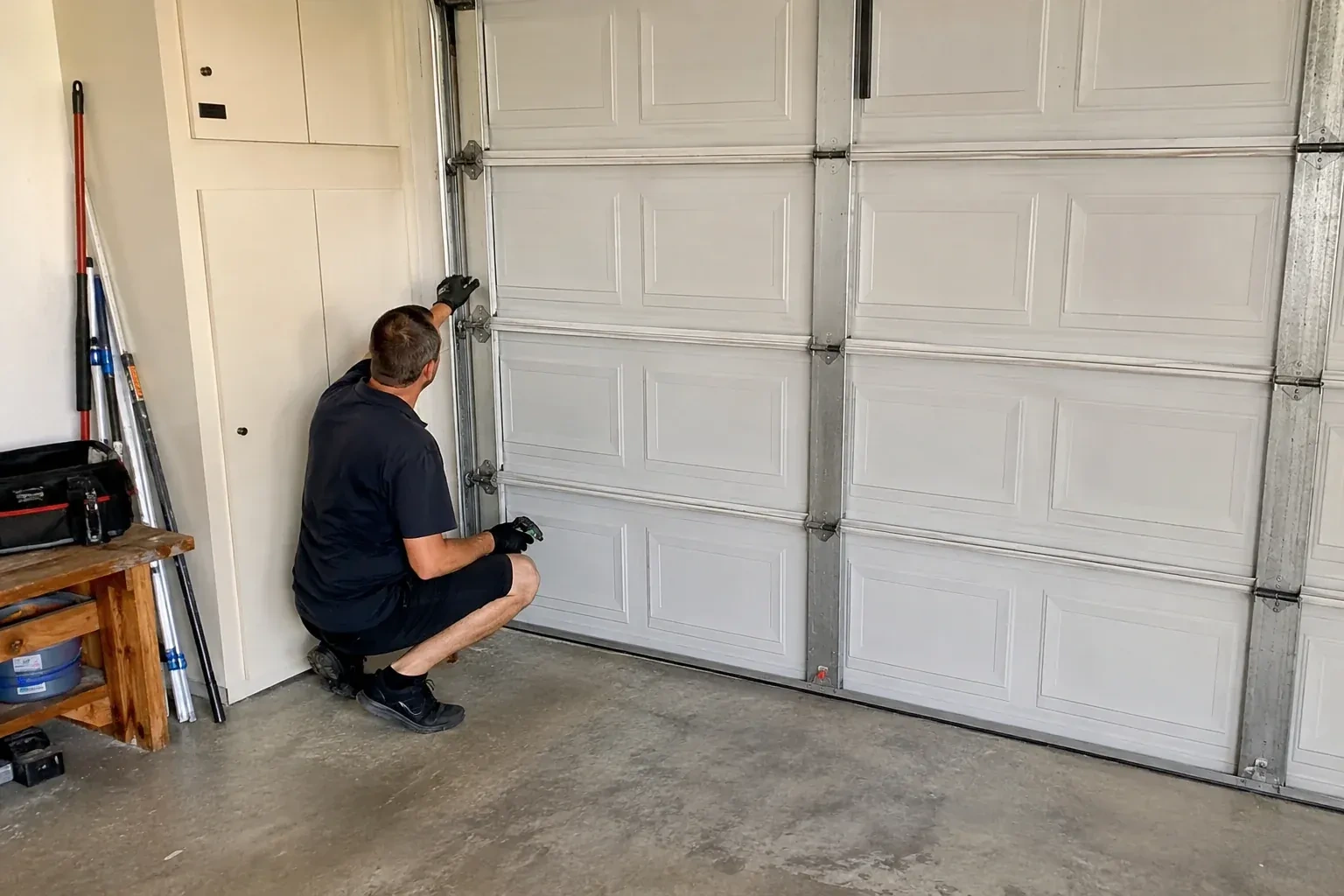
It has been a hard winter. The bottom seal froze to the slab twice, the opener groaned each morning, and one afternoon you noticed a cable on the left side hanging with a little slack in it.
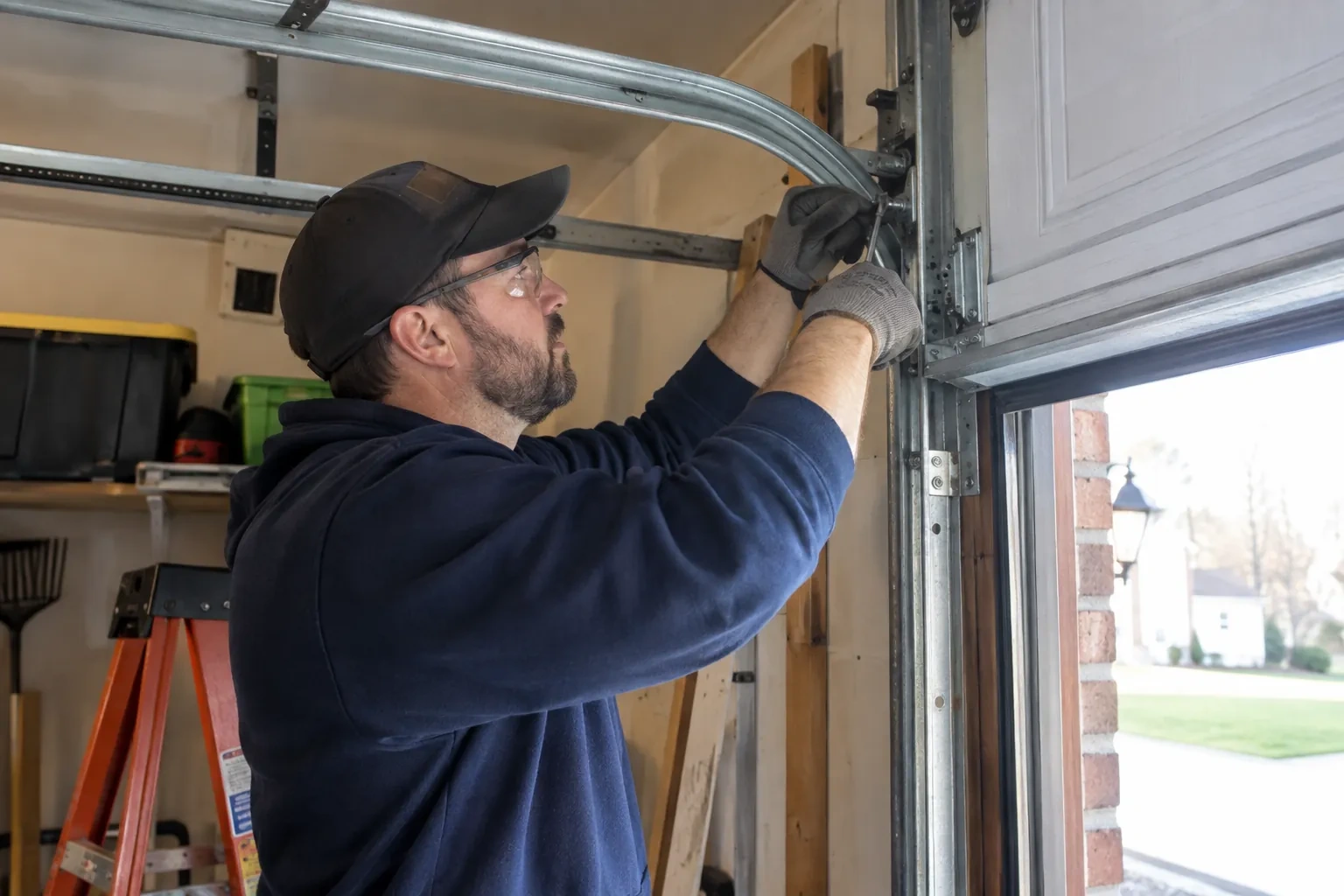
An inspection separates looking from fixing on purpose. Springs, cables, drums and bottom brackets hold the door's weight as stored tension, so the technician examines them closely, measures what can be measured and photographs what matters, without loosening or winding anything. Once the findings are written down, any adjustment or repair becomes its own planned job, done with the door secured and the stored spring tension controlled by whichever method that system calls for. This order protects the hardware as much as the people around it, and it means the report describes the door as it actually is rather than as it was left after a hurried tweak.
Sound familiar?Winston Park
Garage Door Safety Inspection · Winston Park
Scene 1
The door is only as good as what it hangs from and closes against. The technician checks the header for sagging where the spring anchor and opener bracket carry their loads, the jambs for soft or split wood where the track brackets bite, and the floor for a lip, heave or ridge that stops the bottom section early. The bottom seal and perimeter weatherstrip are examined for splits, hardening and daylight, since a seal that drags or freezes down puts strain on the counterbalance and the opener. Where a fastener has pulled loose from the framing, that is noted as a repair item rather than tightened into wood that will not hold it.
Scene 2
The opener is reconnected and a flat 2x4 offcut is laid on the floor across the centre of the opening. The door is sent down from the wall control. On meeting the board it should stop and reverse to fully open on its own. If it stalls on the board, pushes against it, or only reverses after a long pause, the opener's down-force or travel limit needs attention and the finding goes in the report. Older openers without photo eyes are tested this way too, and their behaviour is recorded against the test the maker specifies. The board is used every time; a hand or foot never stands in for it.
Scene 3
The most useful thing about a first inspection is the second one. With the model numbers, spring dimensions, cable condition, seal gaps and photo-eye heights on record, the next technician can measure the same points and tell you what has moved rather than starting from nothing. For most households an annual visit fits, with a look in early spring after the salt season a natural choice. A door that carries a lot of traffic, an older door, or one in a rental where nobody watches it closely may suit a check each season. Whatever the interval, the report you are holding is the reference the next one will be read against.
What shapes the quoteArmour Heights Door Specialists
FeesSame any hour
No, and that is deliberate. An inspection reads the counterbalance: the technician checks the coil, measures wire size and length, and watches how the door behaves by hand. If it is out of step with the door's weight, the report says so and by how much. Winding a spring is its own appointment, done once the door is clamped and the system is calm, which keeps the inspection record honest about the door as found.
It is the contact-reversal check. A short length of 2x4 lies flat on the floor in the middle of the opening and the door is closed from the wall button. When the bottom edge meets the wood, the door should halt and travel back up without help. Passing shows the opener's down-force and travel limits are set to back off from something solid. The technician never substitutes a hand or foot for the board.
Most often it is the photo eyes. A sensor knocked slightly out of line, a lens with a film of road grime, a loose wire, or low afternoon sun shining straight into one eye will each break the beam as far as the opener is concerned. The next candidates are a down-force setting that has drifted, a binding roller or a door that has gone out of balance. The inspection checks each in turn.
TorontoOntario
Garage Door Safety Inspection · Toronto, Armour Heights, Lawrence Heights, Lawrence Manor, Wilson Heights
Every square is one home in a hundred.
On-site assessment preferred · (289) 536-9773, open 24/7